




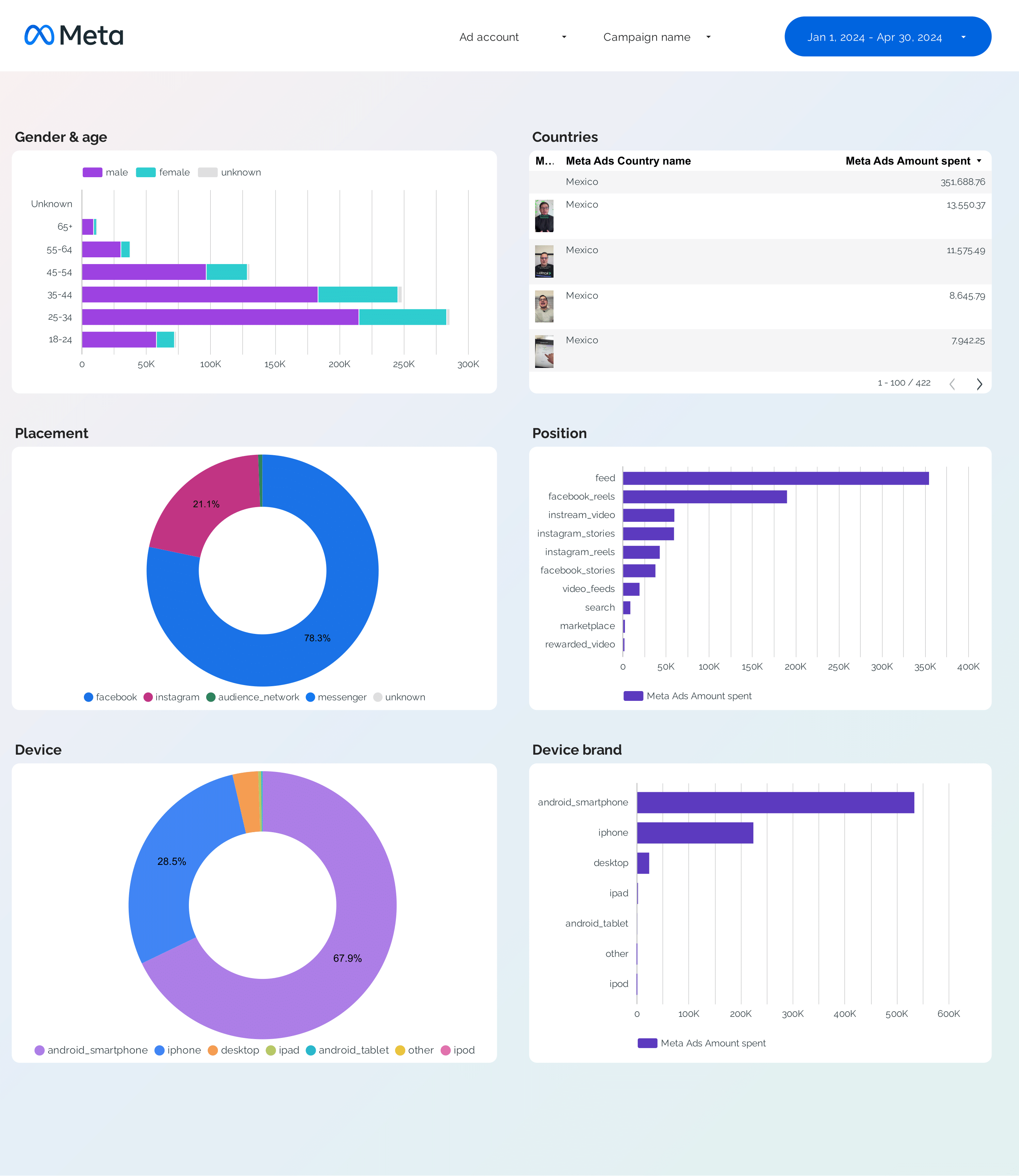
Facebook Ads Audience Dashboard template
The Facebook Ads Audience Dashboard template is designed for PPC professionals seeking to optimize their advertising strategies. This tool provides a structured overview of audience metrics, enabling data-driven decisions.
Features include:
- Demographic Insights: Analyze age, gender, and location data to tailor campaigns effectively.
- Engagement Metrics: Track interactions, clicks, and conversions to assess audience responsiveness.
- Custom Audience Segmentation: Create and manage audience segments for targeted advertising.
- Performance Tracking: Monitor ad performance across different audience groups to identify trends.
Utilize this dashboard to streamline your Facebook Ads campaigns and maximize ROI by focusing on audience-specific data.
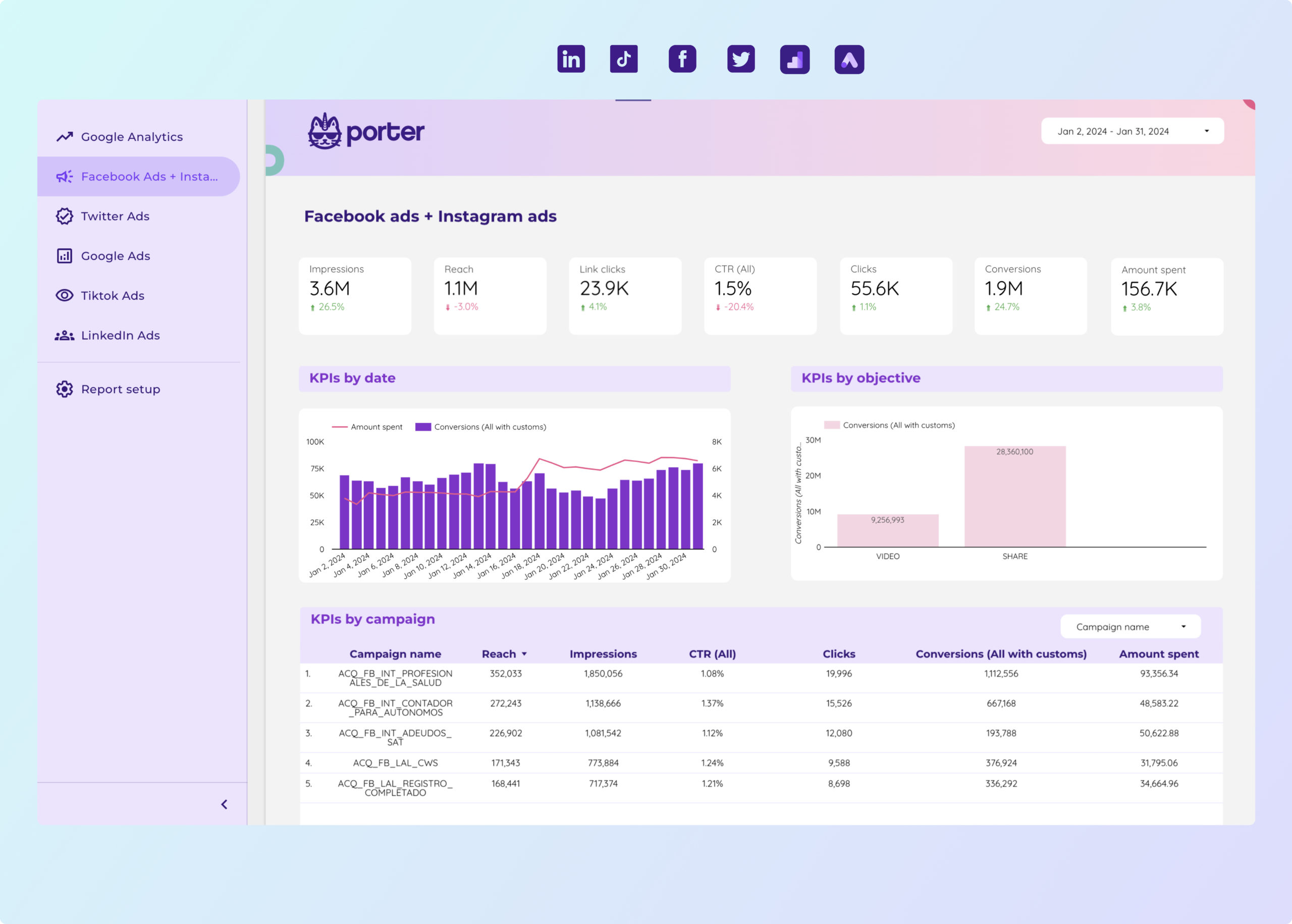
Paid media Dashboard template
This Paid Media Dashboard Template is designed for marketers managing campaigns across multiple platforms. It integrates data from PPC channels such as Google Ads, Facebook Ads, LinkedIn Ads, TikTok Ads, and Twitter Ads.
Utilize this dashboard to track and analyze performance metrics from Google Analytics 4 and Base. The template provides a centralized view of your advertising efforts, allowing for data-driven decision-making.
- Google Ads: Monitor impressions, clicks, and conversion rates.
- Facebook Ads: Analyze audience engagement and ad spend.
- LinkedIn Ads: Evaluate lead generation and campaign reach.
- TikTok Ads: Track video views and user interactions.
- Twitter Ads: Assess tweet engagement and follower growth.
This template is ideal for marketers seeking to consolidate their advertising data into a single, actionable view.
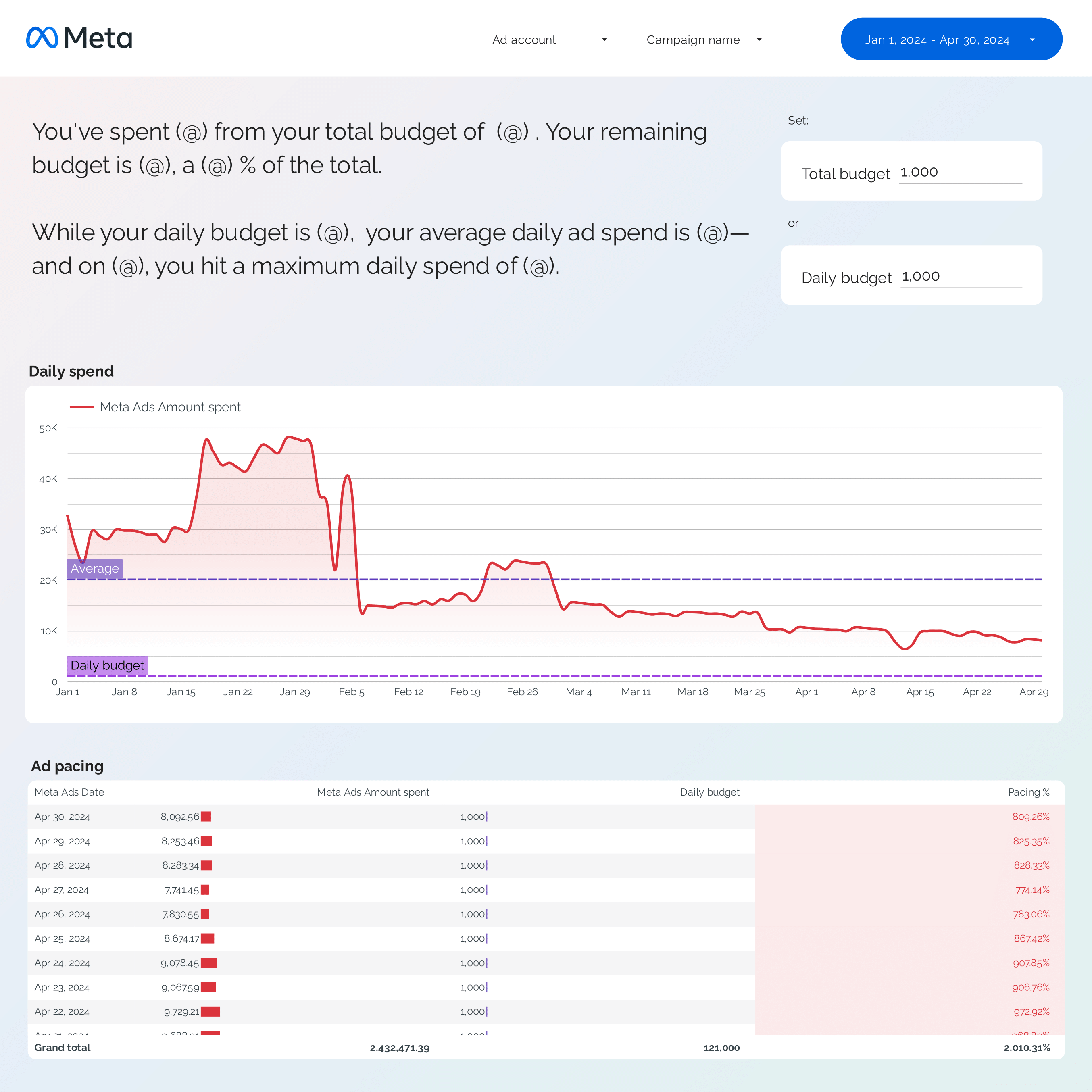
Facebook Ads budget tracking and pacing Dashboard template
The Facebook Ads Budget Tracking and Pacing Dashboard is designed for PPC professionals managing Facebook Ads campaigns. This dashboard provides a clear overview of your ad spend and helps ensure your campaigns stay on track.
With this dashboard, you can:
- Monitor daily spend against your allocated budget to avoid overspending.
- Track pacing to ensure your campaigns are on schedule to meet monthly targets.
- Analyze spend trends to identify patterns and adjust strategies accordingly.
Utilize this tool to maintain control over your Facebook Ads budget and optimize your PPC strategy effectively.
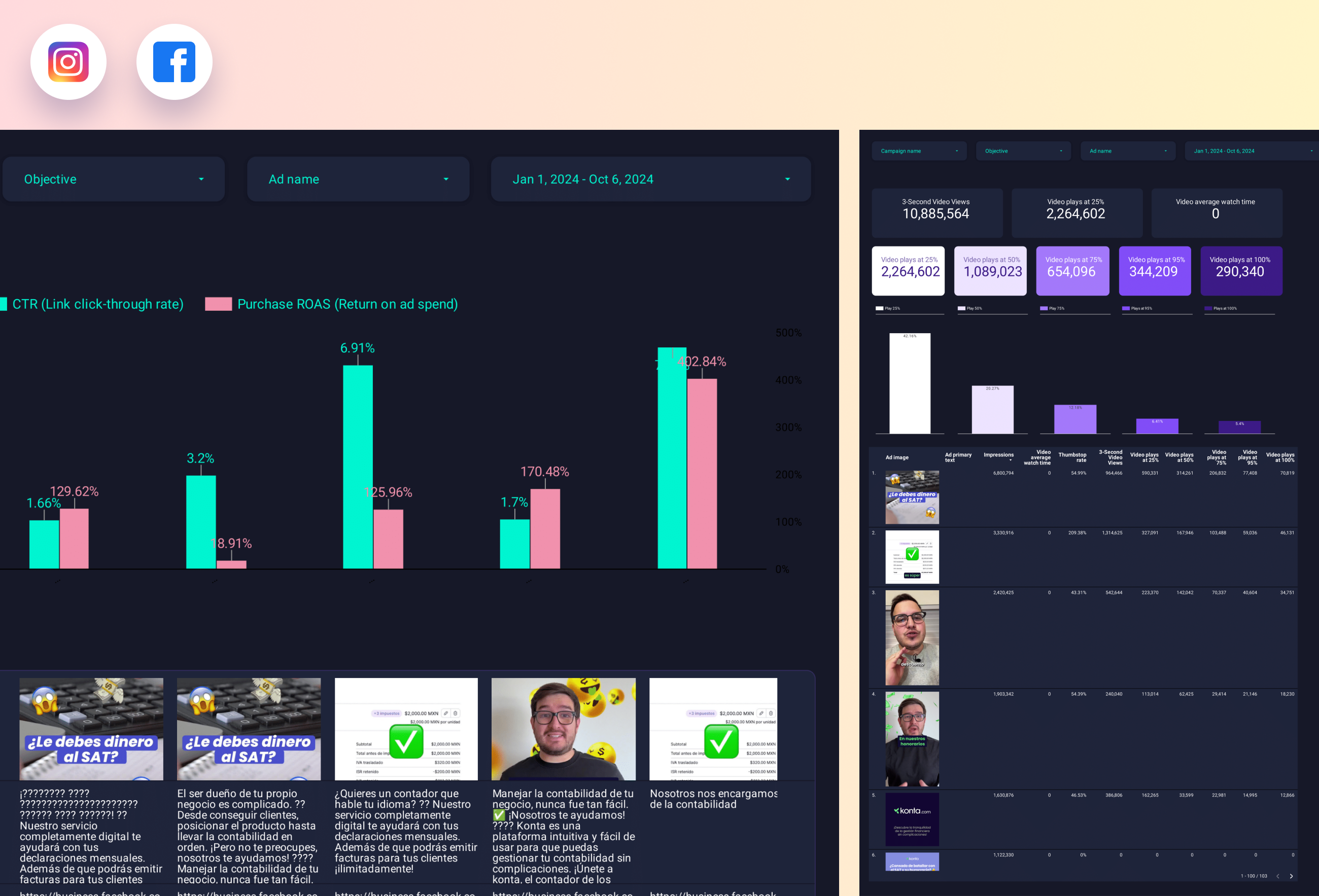
Paid media Creative performance Dashboard template
The Paid Media Creative Performance Dashboard template is designed for marketers managing campaigns across multiple platforms such as PPC, TikTok Ads, Google Ads, Facebook Ads, LinkedIn Ads, and Twitter Ads.
This dashboard provides a centralized view of your advertising efforts, allowing you to track and analyze performance metrics in real-time. It supports:
- Impressions and Clicks tracking for visibility and engagement analysis.
- Cost-per-click (CPC) and Cost-per-acquisition (CPA) metrics for budget management.
- Conversion rates to measure the effectiveness of your ad creatives.
- Platform-specific insights for TikTok, Google, Facebook, LinkedIn, and Twitter.
Utilize this dashboard to streamline your reporting process and make data-driven decisions for optimizing your ad campaigns.
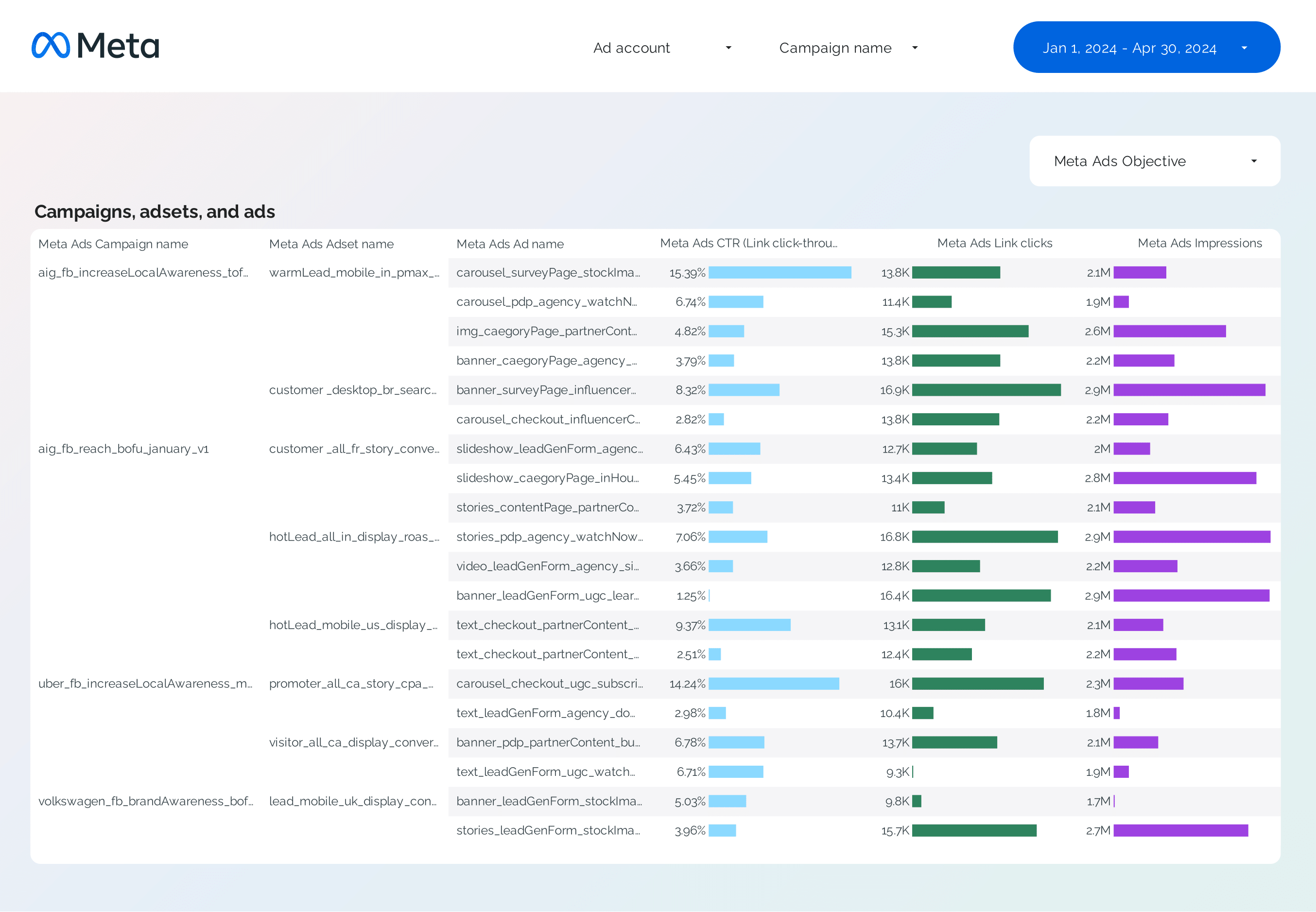
Facebook Ads Campaign performance Dashboard template
This Facebook Ads Campaign Performance Dashboard template provides a detailed overview of your PPC campaigns. It is designed to help you monitor and analyze the performance of your Facebook Ads in real-time.
Features include:
- Impressions and Reach: Track the number of times your ads are displayed and the unique users reached.
- Click-Through Rate (CTR): Measure the percentage of users who clicked on your ad after seeing it.
- Conversion Tracking: Monitor the actions users take after interacting with your ad, such as purchases or sign-ups.
- Cost Analysis: Evaluate your ad spend, cost per click (CPC), and cost per acquisition (CPA).
- Audience Insights: Analyze demographic data to understand who is engaging with your ads.
This dashboard is essential for marketers looking to optimize their Facebook Ads strategy and maximize ROI.
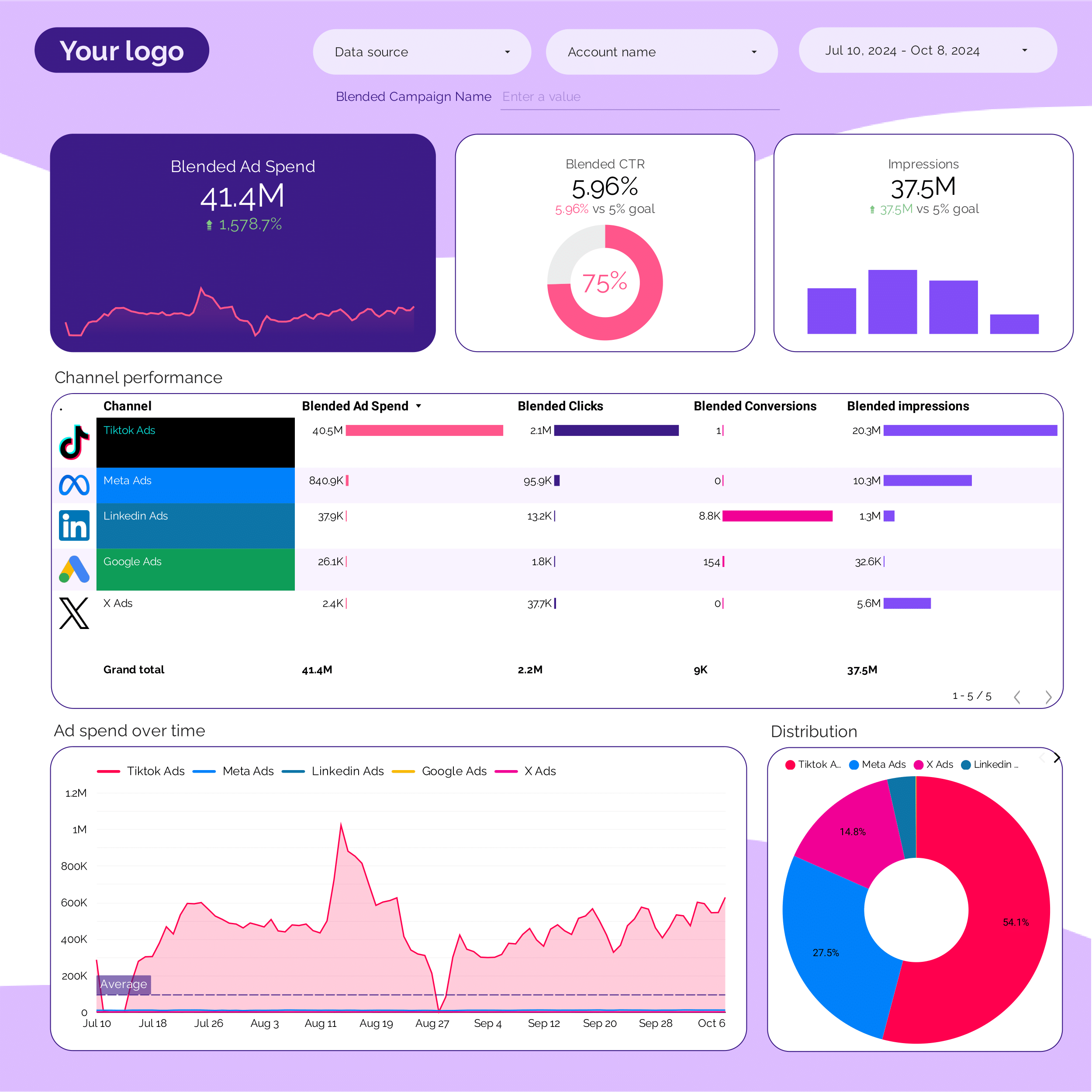
PPC Dashboard template
The PPC Dashboard Template is designed for managing and analyzing advertising campaigns across multiple platforms. This template supports:
- Google Ads
- Facebook Ads
- LinkedIn Ads
- TikTok Ads
- Twitter Ads
Utilize this dashboard to track performance metrics such as click-through rates (CTR), cost per click (CPC), and conversion rates. The template provides a centralized view of your advertising data, allowing for streamlined reporting and analysis.
Features include:
- Real-time data integration from all supported platforms
- Customizable widgets for specific campaign insights
- Automated reporting for daily, weekly, and monthly performance
This template is ideal for marketers looking to optimize their PPC strategies across various social media and search engine platforms.
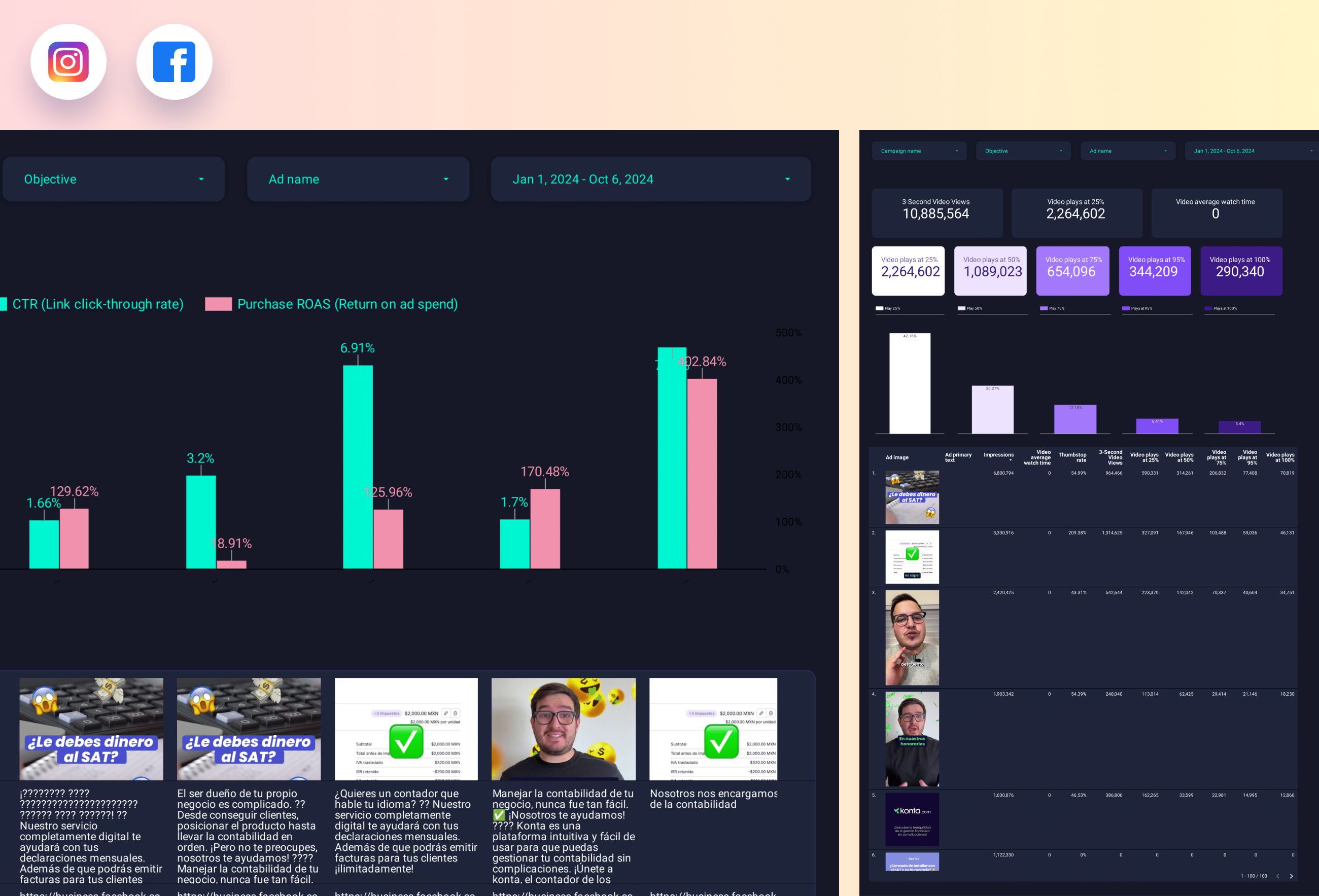
Facebook Ads Creative performance Dashboard template
The Facebook Ads Creative Performance Dashboard template is designed for marketers focused on PPC campaigns. This tool provides a structured view of your Facebook Ads performance, allowing for detailed analysis of creative elements.
With this dashboard, users can:
- Track ad performance metrics such as CTR, CPC, and conversion rates.
- Analyze creative variations to determine which visuals and copy drive the most engagement.
- Monitor audience interactions and demographic insights to refine targeting strategies.
Utilize this template to streamline your Facebook Ads analysis and optimize your PPC strategies effectively.
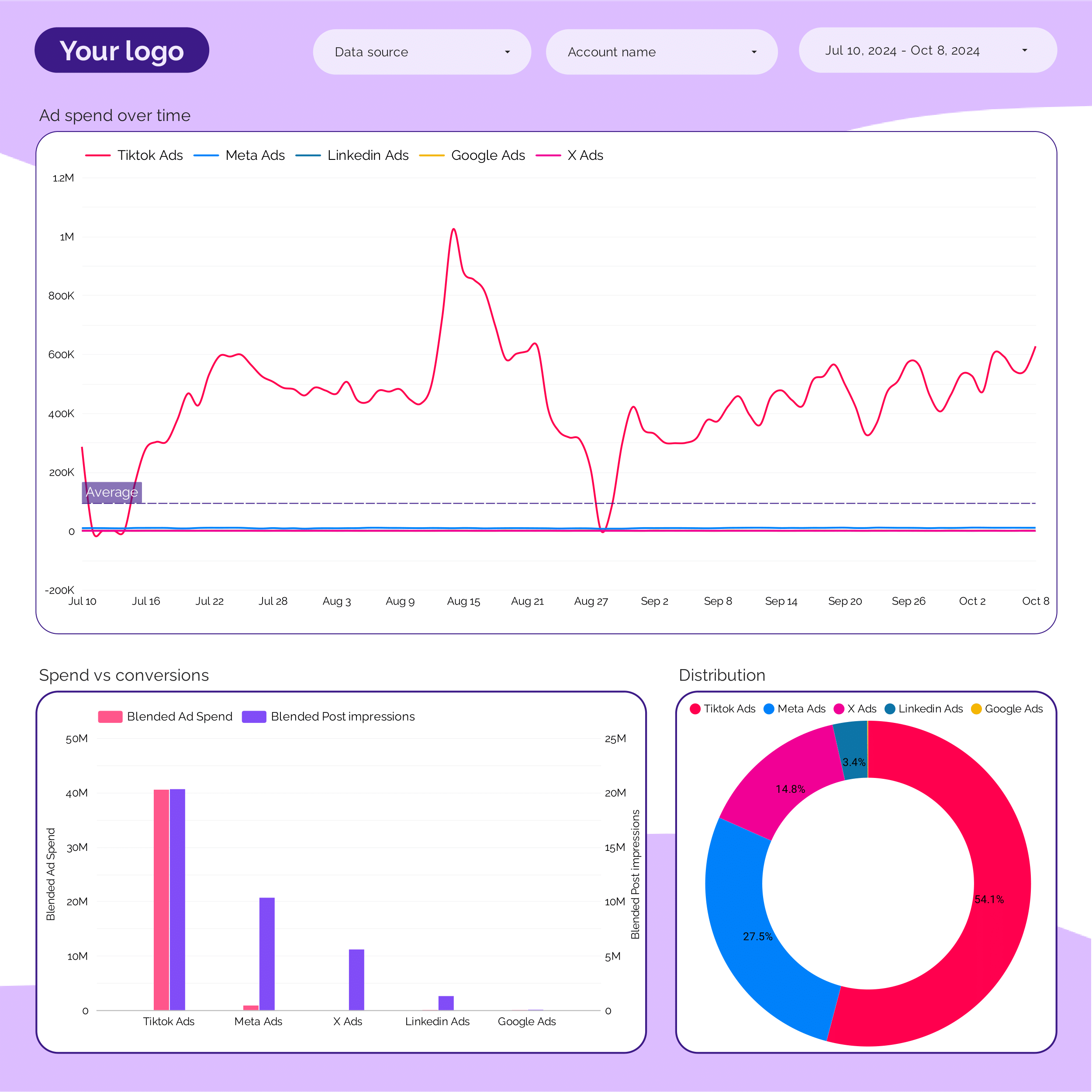
PPC budget tracking and pacing Dashboard template
The PPC Budget Tracking and Pacing Dashboard template is designed for managing and monitoring advertising spend across multiple platforms, including Facebook Ads, Google Ads, LinkedIn Ads, TikTok Ads, and Twitter Ads.
This dashboard provides a centralized view of your advertising budget and spend, allowing for real-time tracking and adjustments. It is structured to support the following functionalities:
- Budget Allocation: Set and adjust budgets for each platform to align with campaign goals.
- Spend Monitoring: Track daily, weekly, and monthly spend to ensure alignment with budgetary constraints.
- Pacing Analysis: Evaluate spend rates to determine if campaigns are on track to utilize the allocated budget effectively.
- Performance Metrics: Integrate key performance indicators (KPIs) to assess the impact of spend on campaign outcomes.
Utilize this dashboard to maintain control over your PPC campaigns, ensuring that your advertising spend is optimized across all platforms.
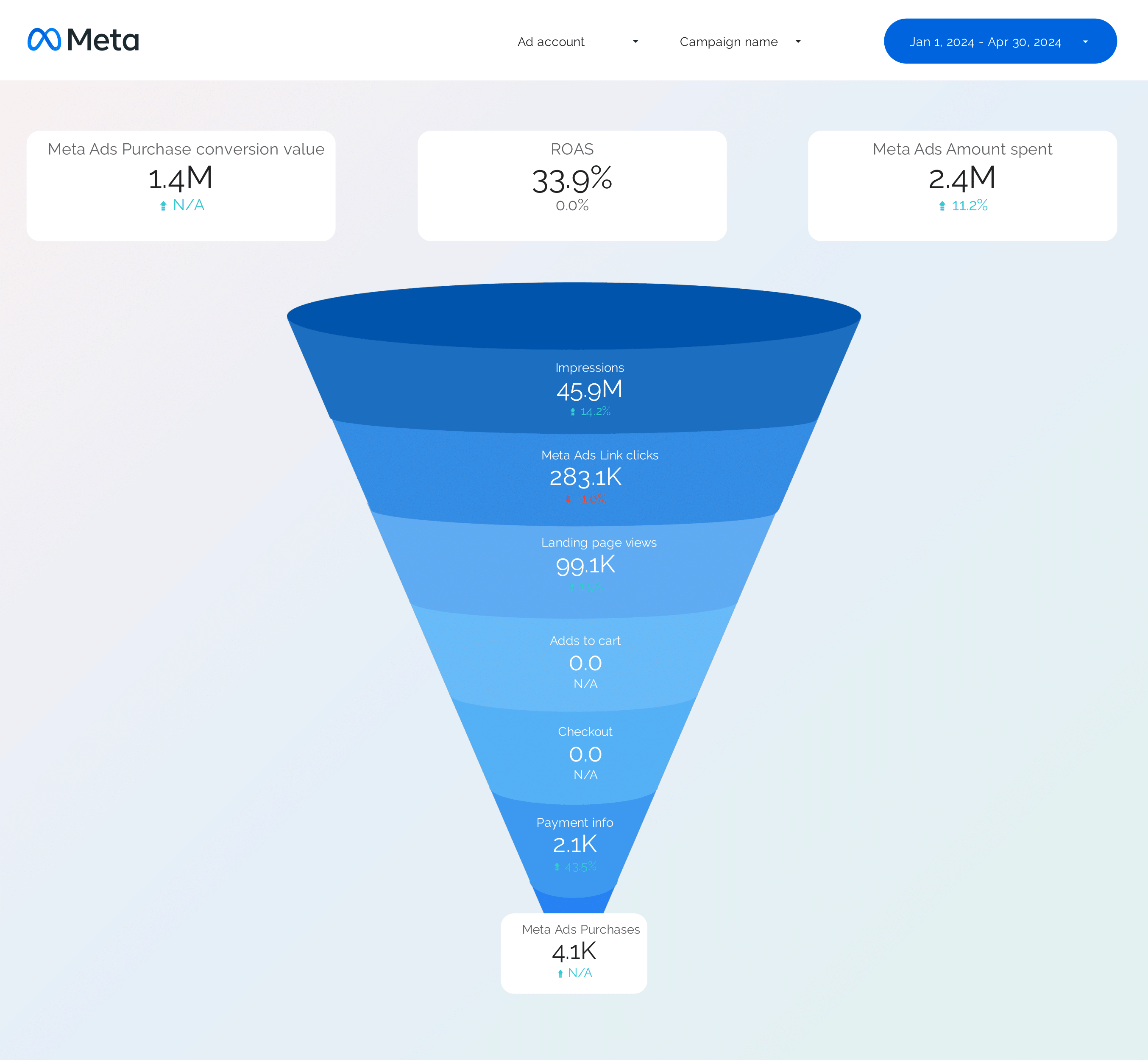
Facebook Ads Funnel Dashboard template
The Facebook Ads Funnel Dashboard template is designed for marketers focusing on PPC campaigns and Facebook Ads. This dashboard provides a structured view of your advertising funnel, allowing you to track and analyze the performance of your campaigns.
With this template, you can:
- Monitor ad spend and ROI across different stages of the funnel.
- Analyze conversion rates from initial engagement to final purchase.
- Identify bottlenecks in the funnel that may affect campaign performance.
- Track audience engagement metrics to optimize targeting strategies.
This dashboard is an essential tool for managing and optimizing your Facebook Ads campaigns, providing clear insights into each stage of the customer journey.
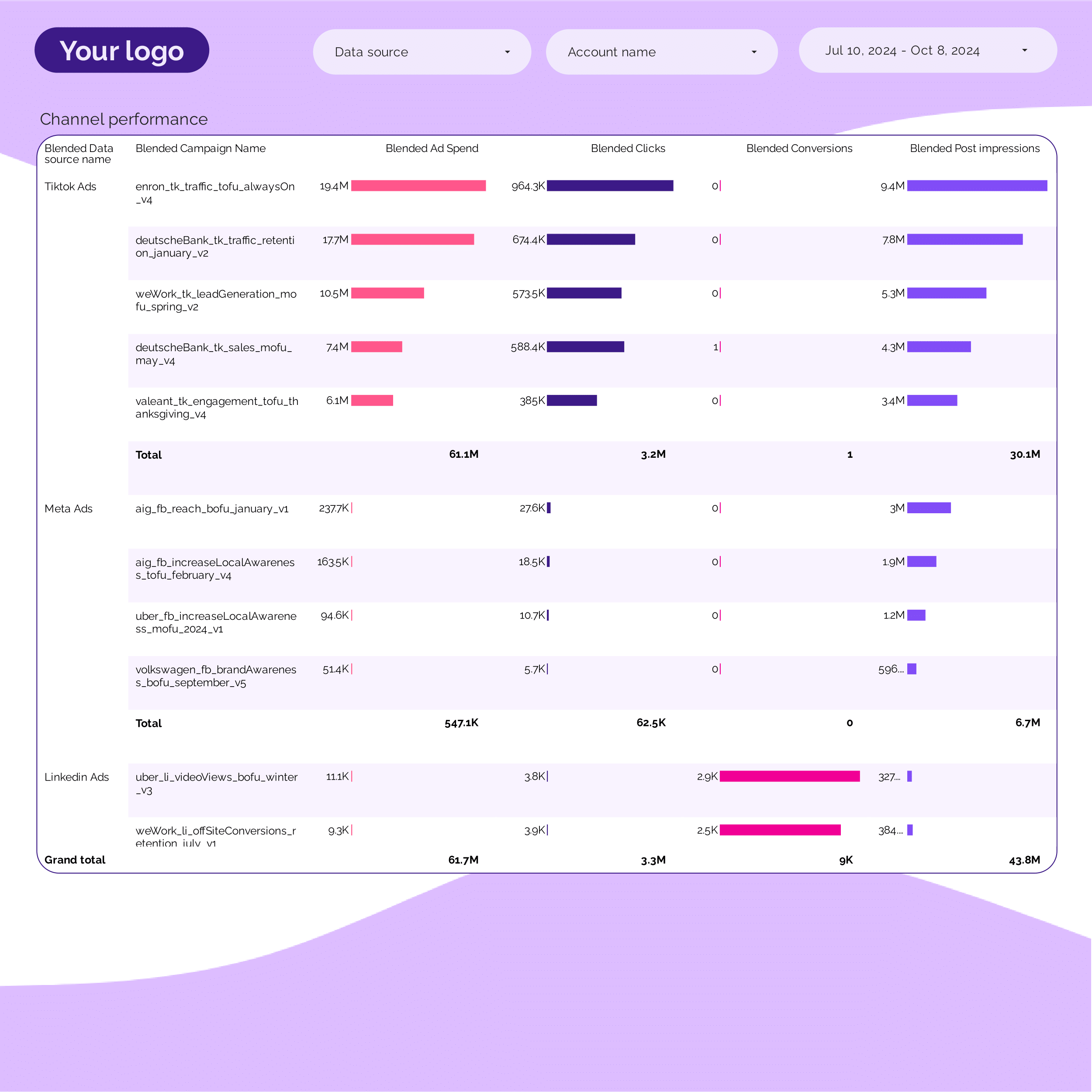
PPC Campaign performance Dashboard template
The PPC Campaign Performance Dashboard template provides a centralized view of your advertising efforts across multiple platforms. This dashboard is designed to track and analyze the performance of your campaigns on Facebook Ads, Google Ads, LinkedIn Ads, TikTok Ads, and Twitter Ads.
With this dashboard, you can monitor:
- Impressions and Clicks to understand audience engagement.
- Click-Through Rate (CTR) to measure the effectiveness of your ad creatives.
- Cost Per Click (CPC) and Cost Per Acquisition (CPA) for budget management.
- Conversion Rates to assess the success of your campaigns in achieving desired actions.
- Return on Ad Spend (ROAS) to evaluate the profitability of your advertising investments.
This template allows for a detailed comparison of performance metrics across different platforms, providing insights into which channels are delivering the best results.
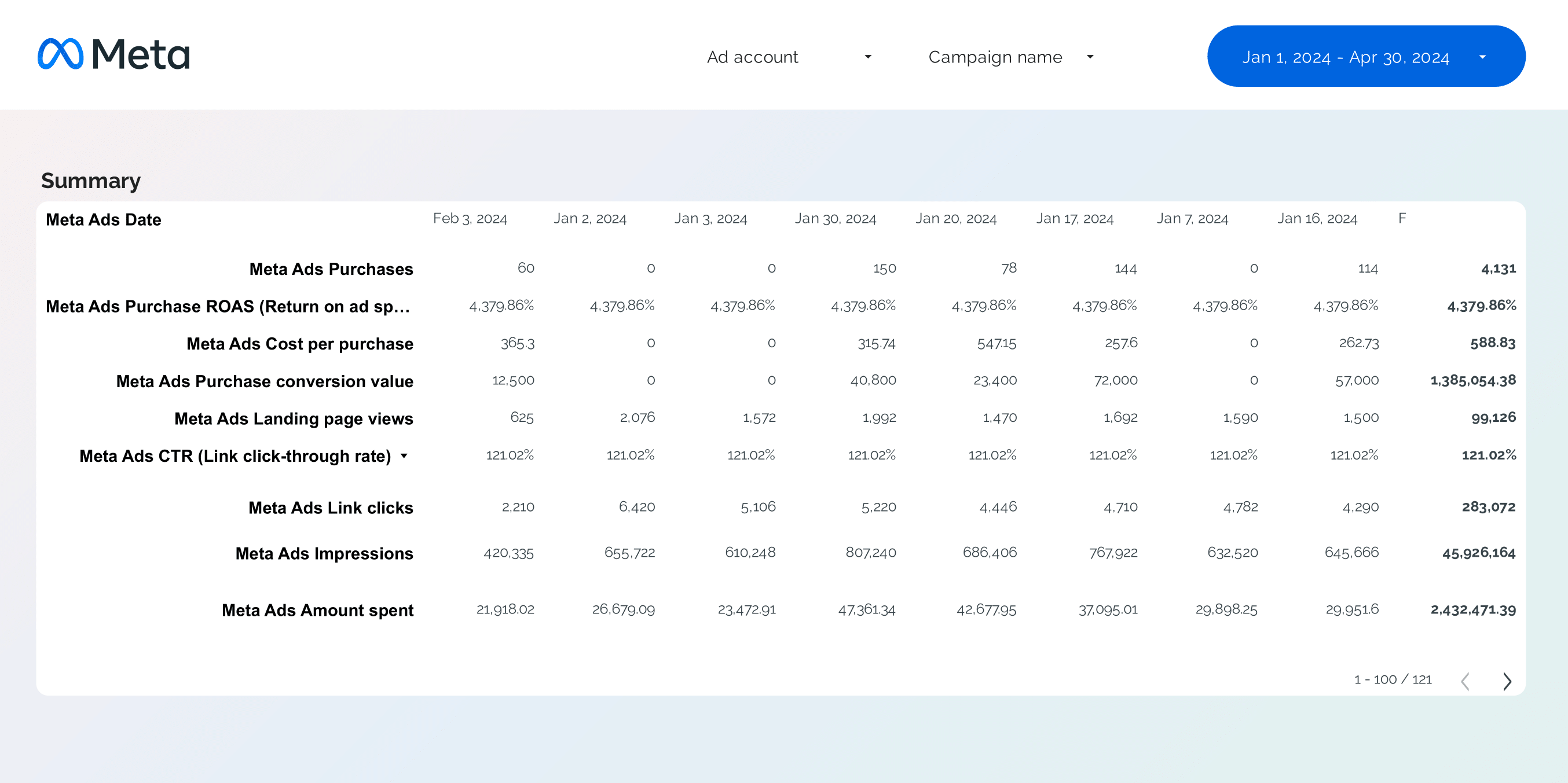
Facebook Ads KPI tracker Dashboard template
Track your Facebook Ads performance with our KPI Tracker Dashboard Template. This tool is designed for PPC professionals focused on goal tracking and optimizing ad spend.
Monitor essential KPIs such as:
- Click-Through Rate (CTR): Measure the effectiveness of your ad creatives.
- Conversion Rate: Track the percentage of users completing desired actions.
- Cost Per Click (CPC): Analyze the cost-effectiveness of your campaigns.
- Return on Ad Spend (ROAS): Evaluate the revenue generated for every dollar spent.
Utilize this dashboard to align your advertising strategies with business objectives, ensuring data-driven decisions in your Facebook Ads campaigns.
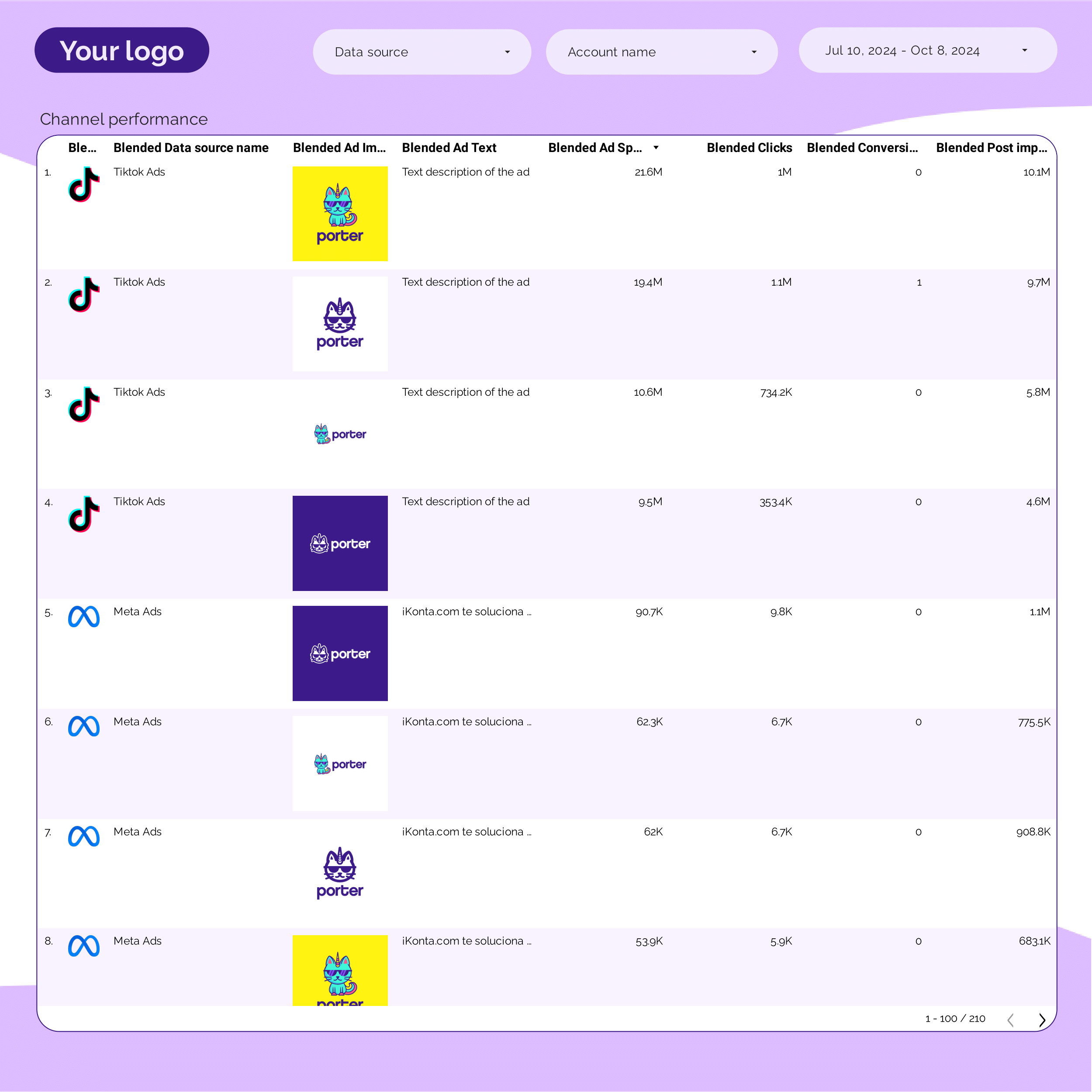
PPC Creative performance Dashboard template
The PPC Creative Performance Dashboard template provides a centralized view of your advertising efforts across multiple platforms, including Facebook Ads, Google Ads, LinkedIn Ads, TikTok Ads, and Twitter Ads.
This dashboard focuses on creative performance metrics to help you analyze and optimize your ad creatives. It includes:
- Impressions: Track the number of times your ads are displayed.
- Clicks: Monitor the number of clicks your ads receive.
- CTR (Click-Through Rate): Calculate the percentage of clicks per impression.
- Conversion Rate: Measure the percentage of clicks that result in a conversion.
- Cost Per Click (CPC): Analyze the average cost incurred for each click.
- Cost Per Conversion: Determine the cost associated with each conversion.
Utilize this dashboard to compare performance across different platforms and identify trends in your ad creatives. This tool is essential for marketers looking to maximize their advertising ROI by focusing on creative elements that drive results.