





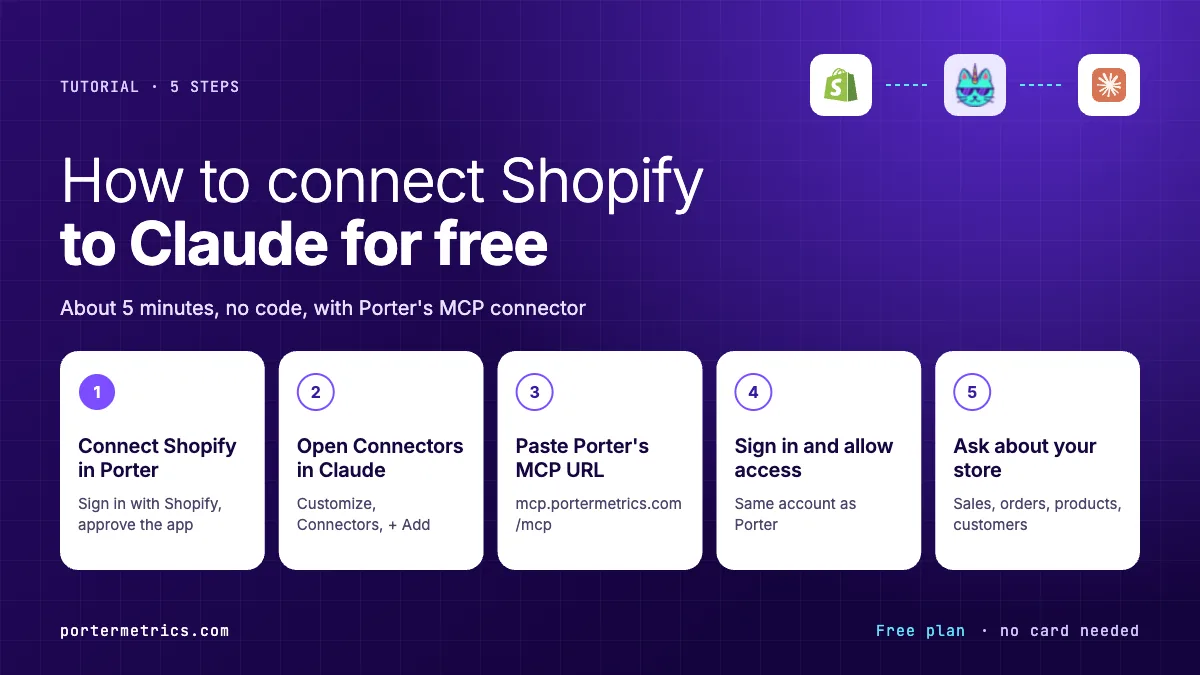
- Sign up free at Porter, choose Shopify and approve Porter’s app in your store.
- In Claude, open Customize, then Connectors, click + Add and choose Add custom connector.
- Name it Porter Metrics and paste
https://mcp.portermetrics.com/mcp. - Click Connect, sign in to Porter and allow access.
- Open a new chat and ask about sales, best sellers or customers.
Is there an official Shopify MCP?
Yes, but not one for reporting. Shopify’s Dev MCP and AI Toolkit help developers with docs and code, and its storefront, checkout and Customer Accounts servers serve shoppers. None of them lets you ask Claude how your store is doing. Porter’s connector does, and can also update products or create discount codes after you approve.
| Method | Setup | Read or write | Works in | Free? | Best for |
|---|---|---|---|---|---|
| Porter connector (MCP) | 5 minutes, no code | Reads orders, sales, products and customers; updates products and creates discounts after you approve | claude.ai, Claude Desktop, Cowork, Claude Code | Free plan, last 15 days | Store owners and marketers |
| Shopify Dev MCP and AI Toolkit | 5 minutes | Docs, API schemas and code checks; some store tasks through Shopify CLI | Claude Code and other coding tools | Yes | Developers building themes and apps |
| Community Admin API servers | 30 minutes or more | Whatever your app’s scopes allow | Claude Code, Claude Desktop | Yes | Developers who manage their own keys |
| CSV export from Shopify | 10 minutes each time | Read only, a snapshot | Any Claude chat | Yes | A one-off analysis |
Comparing MCP options in more detail? See Porter’s Shopify MCP server.
Before you start
- A Shopify store where you can approve app installs
- Claude on any plan. The Free plan allows one custom connector
- A free Porter account
- For profit and margins: product costs in Shopify, and the “View cost” permission on your staff account
How to connect Shopify to Claude (claude.ai)
Connect Shopify in Porter
Sign up free at Porter, choose Shopify as the source, sign in with Shopify and approve Porter’s app. Then select the stores Claude should read.
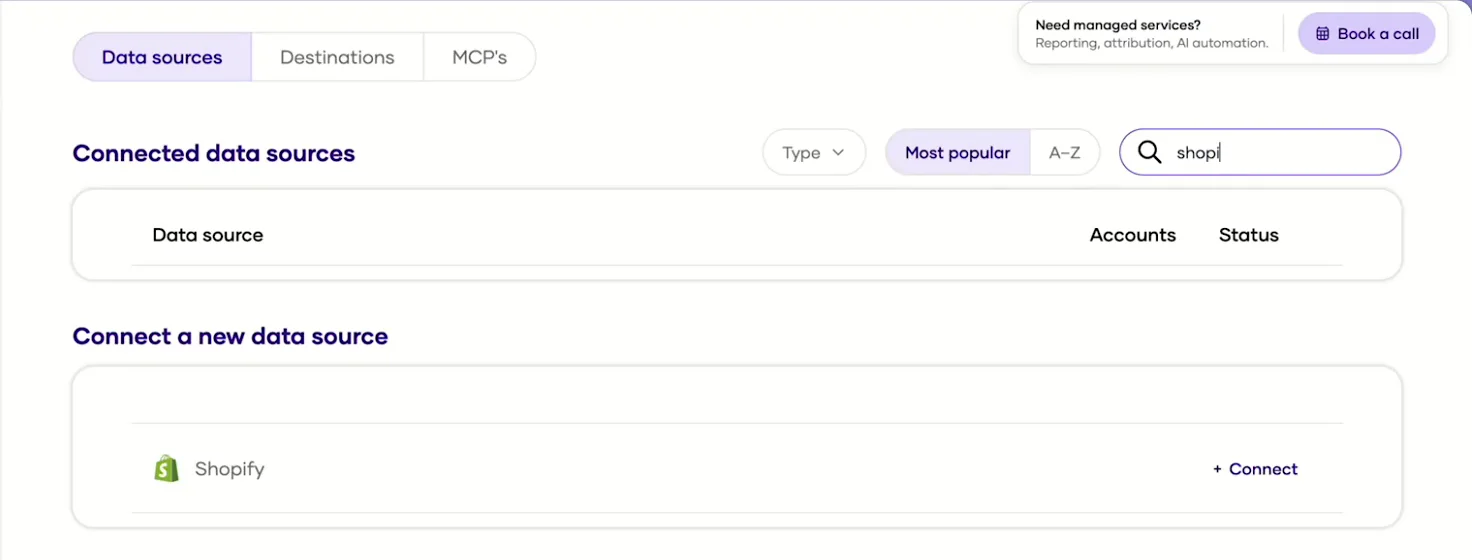
Porter, Integrations, search Shopify and click Connect.
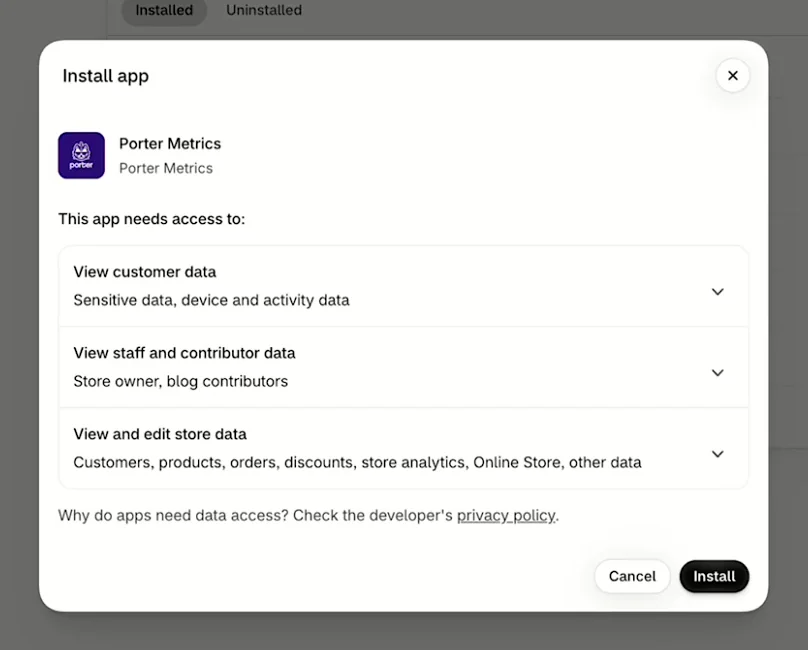
Shopify shows the data Porter can access. Click Install.
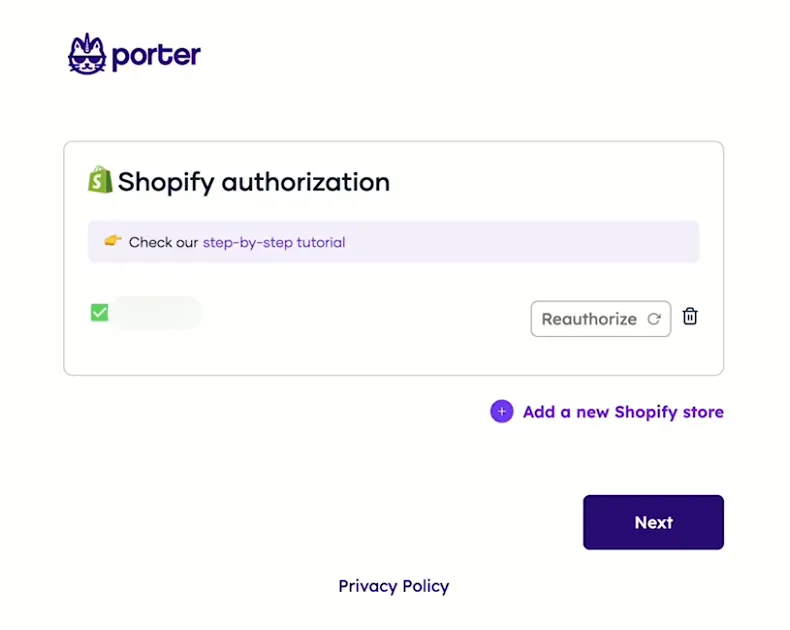
Your store is connected in Porter. Click Next.
Open Connectors in Claude
In Claude, open Customize, then Connectors, click + Add and choose Add custom connector.
Where to find custom connectors in Claude.
Paste Porter’s MCP URL
Name it Porter Metrics and paste this URL, then click Add:
https://mcp.portermetrics.com/mcp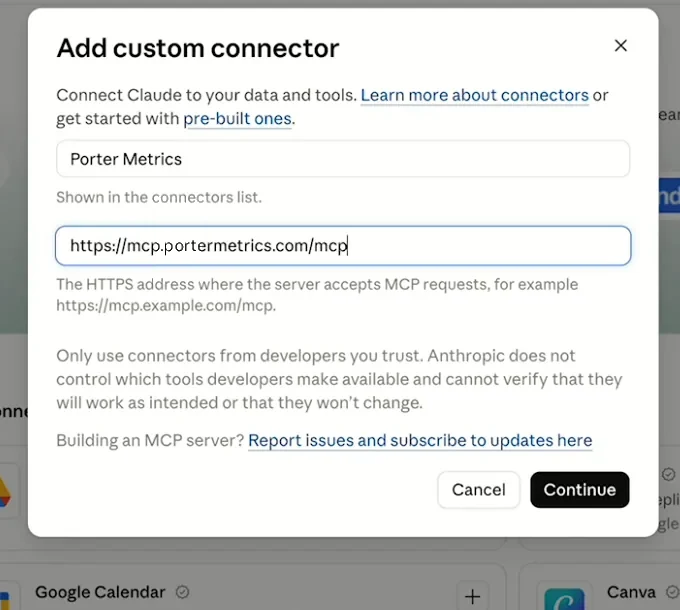
Claude, Customize, Connectors, Add custom connector.
Sign in and allow access
Click Connect next to Porter Metrics, sign in with the account you use in Porter and allow access.
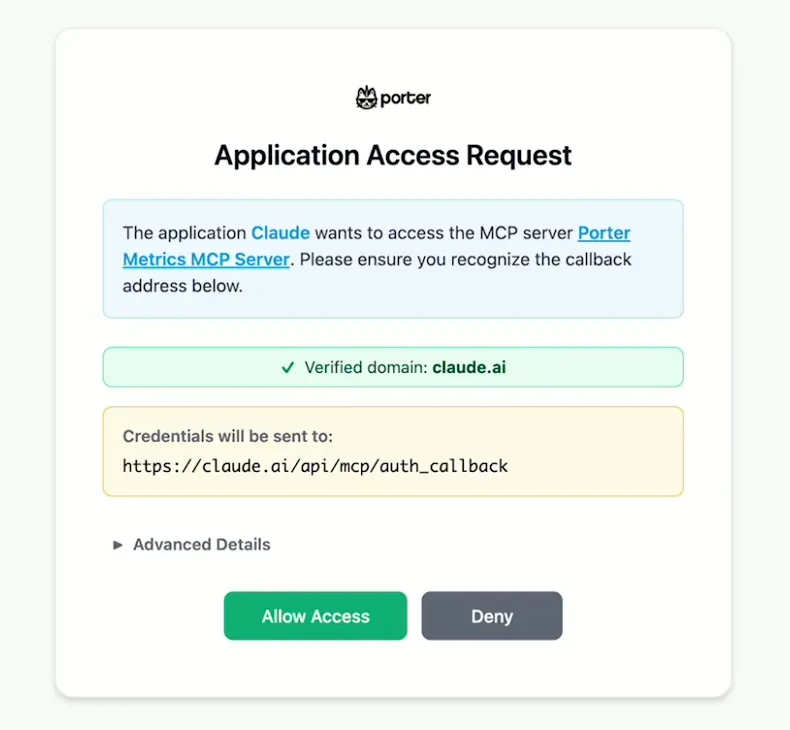
Porter asks you to allow Claude to use the Porter MCP server.
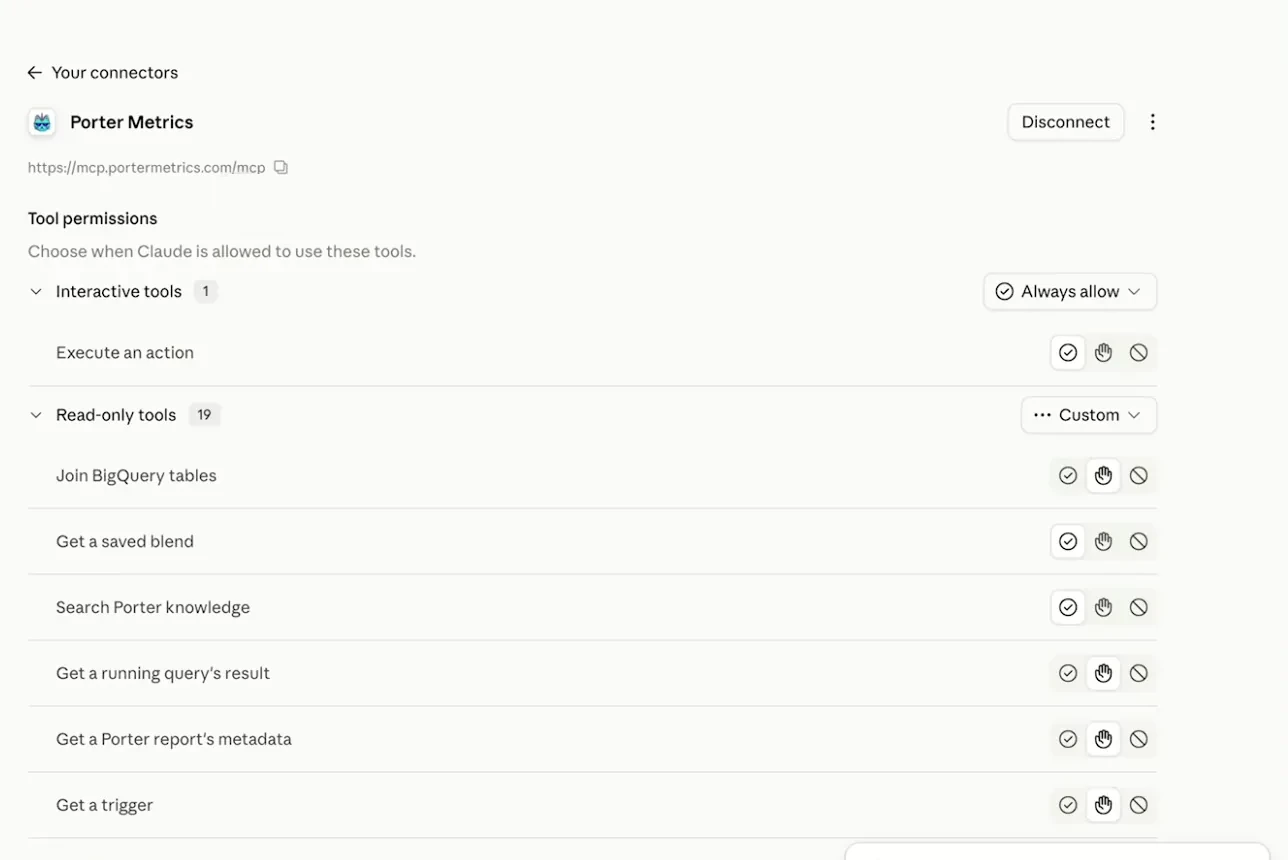
Porter Metrics connected in Claude.
Ask your first question
Open a new chat and try: “Which products sold best in the last 14 days, and how much stock is left?”
 Claude
 Porter connected
 Porter / Shopify / trailgear.demo✓ 12 rows
| Product | Units | Net Sales | Stock |
|---|---|---|---|
| Trail boots | 54 | $4,860 | 9 |
| Rain shell | 23 | $3,450 | 41 |
| Wool socks | 115 | $1,840 | 260 |
Prefer clicking through it? Open the interactive Shopify to Claude demo.
Claude Desktop, Cowork, Claude Code and Team plans
Add Porter once on claude.ai and it shows up in Claude Desktop and Cowork when you sign in with the same Claude account. The steps are the same on every model, from Opus to Haiku.
Claude Code
Claude Code runs in your terminal, so you add Porter with one command. --scope user makes it available in every project:
claude mcp add --transport http porter https://mcp.portermetrics.com/mcp --scope userThen type /mcp, pick porter and sign in in the browser tab that opens.
Claude Team and Enterprise plans
On Team and Enterprise, an owner adds Porter first in Organization settings, then Connectors, with the same URL. After that, each member opens Customize, then Connectors, clicks Connect next to Porter Metrics and signs in with their own Porter account.
Connect several Shopify stores
Brands and agencies with more than one store connect each one in Porter once. Then name the store in your question (“Compare Net Sales for Store A and Store B last month”), or ask for all of them in one table. The Free plan has no limit on connected accounts.
Shopify’s official MCP servers
Shopify publishes three kinds of MCP server. Each is useful, just for a different person.
Dev MCP and AI Toolkit (for developers)
The Shopify AI Toolkit and Dev MCP give coding agents Shopify’s docs and API schemas, check GraphQL and Liquid code, and can run some store tasks through the Shopify CLI. It runs locally with Node.js 18 or later. In Claude Code:
claude mcp add --transport stdio shopify-dev-mcp -- npx -y @shopify/dev-mcp@latestStorefront and checkout (for shopping assistants)
These let AI assistants search a store’s catalog, build a cart and start checkout for a shopper. Shopify has moved the catalog and cart tools from the old Storefront MCP to its Universal Commerce Protocol endpoint.
Customer Accounts MCP (for logged-in shoppers)
The Customer Accounts MCP lets a signed-in shopper ask an assistant about their own orders, returns and account.
None of these reports on your store’s sales. Community servers such as shopify-mcp on GitHub read the Admin API, but you create the app, manage its keys and run the server yourself.
What you can do once Shopify is connected
- Sales reporting: orders, Net Sales and average order value by day, week or product.
- Products and stock: see best sellers and which products will sell out soon.
- Customers: compare first-time and returning customers and their order value.
- Discounts: see which discount codes drive orders and how much they cost you.
- Changes: Claude can update product details and prices, create discount codes and add products as drafts. It asks you before each change.
- Ads vs sales: put Shopify next to Google Ads in Claude or Meta Ads in one table.
First prompts to run
Build a Shopify dashboard with AI
Ask Claude to turn your store data into a live dashboard with its own link you can share. Porter keeps it synced, so you don’t rebuild it every week.
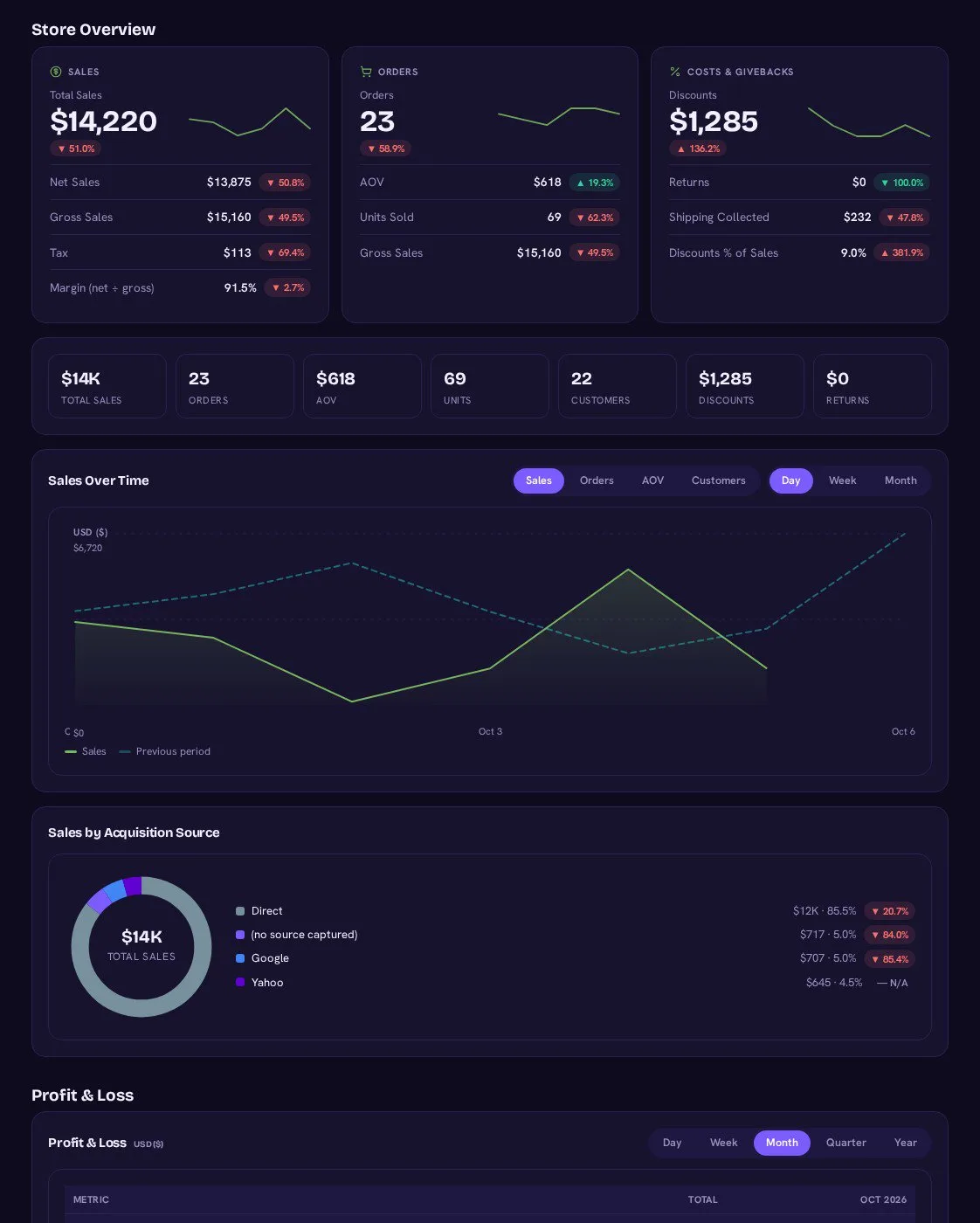
Shopify AI dashboard template, demo data.
Or browse the e-commerce dashboard templates and all dashboard templates.
Shopify metrics Claude can read
Through Porter, Claude reads these Shopify fields, among others:
- Orders, Net Sales, Gross Sales and Total Sales
- Average order value
- Discounts and discount codes
- New and repeat customers, with their sales and order value
- Products, variants and inventory
- Gross profit and cost of goods sold, when product costs are set
- Visit source and UTM parameters
See every Shopify field in Porter
Troubleshooting
Porter doesn’t show in my chat.
Open the tools menu in the chat and turn Porter Metrics on, or start a new chat after adding it.
Authorization failed.
Remove the connector, add it again and sign in with the same account you use in Porter.
My store isn’t listed.
Open Porter and check that the store is selected for Claude, and that you approved Porter’s app in that store.
The numbers don’t match Shopify.
Check the date range, your store’s time zone and whether you compare Net Sales, Gross Sales or Total Sales. Ask Claude which one it used.
Profit shows as zero.
Product costs are missing in Shopify, or your staff account can’t view costs. Add costs to your products and turn on “View cost”.
Is the Shopify MCP safe?
Porter connects through Shopify’s own app install, so Claude never sees your password, and you can remove the app from your Shopify admin at any time. Keep these rules:
- Connect through Shopify’s app approval, never by sharing your login.
- Review every change before Claude makes it, especially prices and discounts.
- Keep new products as drafts until you’ve checked them.
- Give staff accounts only the permissions they need.
Porter reads through Shopify’s official API, and Claude asks you before it changes anything. New products are created as drafts.
Frequently asked questions
Is there an official Shopify MCP?
Yes, several, but they are built for developers and shoppers. Shopify’s Dev MCP and AI Toolkit help coding agents with docs, API schemas and code. The storefront, checkout and Customer Accounts servers let shopping assistants browse a store and check orders. None of them is a reporting connector for asking Claude about your sales.
Can Claude read my Shopify orders and sales?
Yes, with Porter. Claude reads orders, Net Sales, average order value, products, inventory and new vs returning customers. On the Free plan it sees the last 15 days of data.
Can Claude change my Shopify store?
With Porter, yes. Claude can update product details and prices, create discount codes and add products, which start as drafts. It shows you each change first and waits for your approval.
Is it free to connect Shopify to Claude?
Yes. Shopify’s own servers are free, and Porter has a free plan with the last 15 days of data in Claude and 100 AI credits a month for changes. Questions that only read data use no credits.
Can I connect more than one store?
Yes. Connect each store in Porter once, then name the store in your question or ask for all of them in one table. The Free plan has no limit on connected accounts.
Does it work in ChatGPT?
Yes. Porter’s MCP URL works as a ChatGPT connector too, so you can ask the same Shopify questions in ChatGPT.